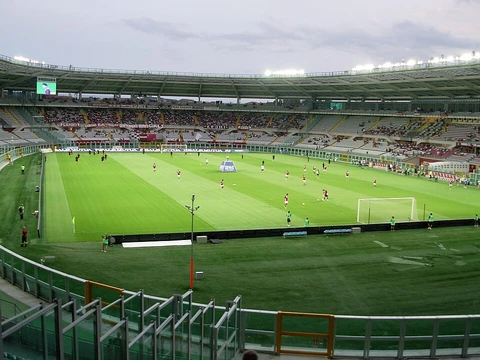
Coppa Italia 1935
Before the Grande Torino, the Granata already knew what it felt like to lift the cup.

The 1935 Coppa Italia is the trophy that first put Torino FC's name on Italy's domestic cup roll, a quiet but seismic moment in the club's long history. Coming nearly three decades after the Granata's founding in 1906, this triumph proved that the dark-red side of the Po Valley was no longer merely a respectable Serie A fixture but a genuine contender for silverware. It arrived in an era when Italian football was still finding its institutional shape, and for a club rooted in the working-class neighbourhoods around Stadio delle Alpi's predecessor grounds, lifting the cup was a statement of belonging at the very top of the game.
For a Granata fan, the 1935 Coppa Italia occupies a special, almost mythic slot: it is the 'first,' the proof-of-concept, the moment the club's identity as a trophy-winning entity was forged before the world even knew what the legendary Grande Torino of the 1940s would become. It is the trophy that says: we were here, we were hungry, and we were good enough.
- Competition
- Coppa Italia
- Year
- 1935
- Club
- Torino FC (I Granata)
- Significance
- One of the club's earliest major domestic honours, predating the Grande Torino era
- Club founded
- 1906
- Kit colour
- Granata (dark maroon-red)
Lore & Background
In the mid-1930s, Italian football was a landscape of regional pride and evolving professionalism. Torino FC, born from the merger of two local clubs in 1906, had already established itself as a serious Serie A side, but the 1935 Coppa Italia was the moment the wider footballing world stopped treating the Granata as a solid mid-table presence and started treating them as a force. The cup run was a declaration: this club, this city, this dark-red shirt, had the quality to beat the best on a single-elimination stage where there was no margin for error.
The era surrounding the 1935 triumph was one of transition. The old amateur-ish structures of Italian football were giving way to the more organised, state-influenced competition that would define the 1940s. Torino sat at the centre of that shift, a club whose identity was already steeped in local loyalty and a particular brand of physical, direct football. The Granata of the 1930s were not yet the poetic, devastatingly technical side that would haunt Europe's memory in the post-war years, but the DNA was there: a relentless work rate, a refusal to yield ground, and a collective identity that transcended any single star.
For the city of Torino, the 1935 cup was also a civic event in the truest sense. Football in the 1930s was still intertwined with neighbourhood identity, with the factories and workshops that lined the streets around the ground. A Coppa Italia win was not just a sporting result; it was the working city saying to the rest of Italy, 'We are here, and we are not to be overlooked.' That spirit would carry through the war years, through the tragedy of Superga, and into the post-war renaissance, but the seed was planted in 1935.
In Their Own Story
The fog off the Po was thick that evening, the kind that swallows the floodlights and turns the stands into grey silhouettes. The terraces were packed not with the polite, distant crowds of a league night but with the raw, shouting, stamping energy of a cup final, and the dark-red shirts in the stands bled into the mist until the whole stadium looked like a single, breathing organism. A boy in the lower tier, maybe twelve, clutched a hand-drawn Granata crest on a scrap of cardboard and could not stop shaking. Around him, men in workman's overalls hammered their palms against the concrete barrier in a rhythm that felt older than the game itself. The whistle blew. The first touch was a long, looping clearance that hung in the wet air like a question. And somewhere in the noise, in the fog, in the thudding of two thousand hearts against two thousand ribs, the 1935 Granata went to work. They did not play pretty. They played true. And when the final whistle came, the boy in the lower tier was not shaking anymore. He was screaming, and the fog, for one impossible moment, turned gold.
Reader's Guide
Coppa Italia – 1935
This is the foundational entry in Torino's cup-honours ledger. The 1935 triumph predates the club's later Coppa Italia wins (1943, 1968, 1970, 1991, 1993) and sits in a distinct era: pre-war Italian football, before the Grande Torino of the 1940s redefined what the club could be. The context was a knockout cup in a league still consolidating its professional structures, and for a club founded in 1906, it was proof that the Granata belonged among Italy's elite.
Why it still matters: For a Granata fan, the 1935 cup is the 'origin trophy.' It is the one you point to when someone says Torino's history is really just the 1940s and the 1970s. It says the club's identity as a cup-winning, title-hungry side was not a post-war invention; it was there from the start. The record itself is, of course, a historical fact and cannot be 'broken,' but its emotional weight in the club's lore is effectively unbreakable. It is the first name on the list, and no later trophy displaces it.
No living record is at stake here. What is alive is the narrative: the 1935 cup is the thread that connects the 1906 founding to the Superga tragedy to the modern club. It is the 'before' that makes the 'after' make sense.
Did You Know?
- Torino FC was founded in 1906, meaning the 1935 Coppa Italia came nearly three decades into the club's existence, well after it had established itself as a regular Serie A presence.
- The 1935 cup predates the legendary 'Grande Torino' era of the 1940s, meaning the club's identity as a major trophy winner was already in place before its most famous (and most tragic) chapter.
- Torino's nickname 'I Granata' refers to the dark maroon-red of their home kit, a colour that has been a constant through every era of the club's history, from 1906 to the present day.
- The 1935 Coppa Italia is one of six Coppa Italia titles in the club's honours cabinet, making it the first of a tradition that would continue through the 1940s, 1960s, 1970s, and 1990s.
More in Honours & Records
Elsewhere in the Torino FC universe
Spotted an error? Know more?
This is a living reference — every entry is fact-audited, and reader corrections feed straight into our audit queue. Suggest an edit · See this site's audit record