Bruno Giordano
A granata wall built in the shadow of the Po, holding the line while a city mourned and rebuilt.

Bruno Giordano was an Italian defender who wore the granata shirt of Torino FC during the club's long and painful reconstruction in the 1950s, the decade that followed the catastrophic Superga air disaster of 1949. He was one of the many home-grown and acquired players who helped stitch together a new identity for a club that had lost its entire first team in a single afternoon over the Po Valley.
In the unspoken hierarchy of Torino's post-war memory, players like Giordano occupy a particular place: not the household names of the Grande Torino, but the quiet, grinding defenders who held the line while the club clawed its way back into the upper tiers of Italian football. His story is inseparable from the story of a city that refused to let its team disappear.
- Role
- Defender
- Affiliation
- Torino FC
- Nationality
- Italian
- Era
- 1950s (post-Superga reconstruction)
Lore & Background
The Torino of the early 1950s was a club in exile from its own history. The Grande Torino, the team that had dominated Italian football through the late 1940s, was gone — all eleven players and their coach lost in the Superga crash of 4 May 1949. What remained was a skeleton squad, a devastated stadium, and a city that had made the granata colour part of its civic identity. Into that void stepped a generation of players, many of them young, many of them from the club's own youth academy, who had to learn to be Torino without the ghosts who had defined it.
Bruno Giordano was among those who answered that call. As a defender in a side that was still finding its shape, his role was unglamorous by design: track, tackle, hold position, and deny. In an era before the tactical sophistication that would later define Italian football, the full-back was the last line of a team that could not afford to concede. Giordano's value was not measured in goals or headlines but in the absence of them — in the clean sheets, the cleared balls, the stubbornness of a man who understood that Torino's survival depended on not breaking first.
The rivalry with Juventus, already fierce before Superga, took on a different emotional texture in the 1950s. For Torino's players, every derby was a reminder of what had been lost and a declaration that the club would not be written out of the city's story. Giordano, like his teammates, carried that weight in every training session at Filadelfia, in every pre-match ritual, in the simple act of pulling on the granata shirt and knowing that thousands of fans were watching to see whether their team still existed.
In Their Own Story
The November fog sat low over the Po, turning the floodlights at Filadelfia into smears of amber. Bruno Giordano stood at the touchline, lacing his boots with the slow, ritual patience of a man who had done this a hundred times and would do it a hundred more. His left knee ached — old, stubborn, the kind of pain that never fully left. Around him, the dressing room hummed with the low murmur of teammates checking their studs, their boots, their nerves. No one spoke of Superga. You didn't have to. The empty seats in the upper tier, the ones that had been full on that fateful May afternoon, were a silence louder than any chant. Giordano tied the last lace, stood, and walked out onto the grass. The smell of cut turf and cold mud filled his lungs. Somewhere in the crowd, a child in a granata scarf was crying, and he understood, because he was crying too, and then he wasn't, and the ball was in the air, and he was running, and Torino was still here.
Reader's Guide
The Grande Torino (1943–1949): Under coach Vittorio Pozzo and later the internal leadership of the squad itself, Torino built the most dominant Italian side of the pre-war and immediate post-war era, winning five consecutive Scudetti. Key figures: Valentino Mazzola, Eusebio, and the collective spirit of the team. This era defined what granata meant to the city — not just a club, but a civic identity. Its abrupt end set the emotional baseline for everything that followed.
Superga and the Long Silence (1949–1951): The crash of 4 May 1949 killed the entire first team and coaching staff. Torino was relegated, demoralised, and stripped of its soul. The club's identity had to be rebuilt from the academy and the market. This is the wound that never fully closed, the emotional spine of every Torino narrative.
The Reconstruction (1951–1960): Players like Bruno Giordano, and others from the youth ranks, carried the team through the lower divisions and back. The 1950s Torino was scrappier, less technically gifted than its predecessor, but stubbornly alive. Key figures in this rebuilding included young defenders and midfielders who had no memory of the old team and had to learn what Torino meant from the fans' eyes. This era forged the club's modern identity: resilient, proud, and defined as much by survival as by triumph.
Did You Know?
- The Superga disaster of 4 May 1949 killed all eleven first-team players, the coach, and several staff members in a single air crash, making it one of the deadliest sporting disasters in history.
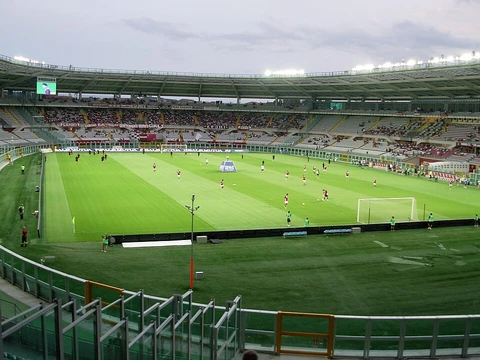
- Torino FC's home ground, Stadio Olimpico Grande Torino (formerly Stadio Filadelfia), sits on the slopes of Monte dei Cappuccini, giving the stadium its distinctive hillside profile.
- The granata (dark red) colour of Torino's kit has been associated with the club since its founding in 1906, making it one of the oldest continuously used club colours in Italian football.
- Torino's rivalry with Juventus, known as the Derby della Mole after the Turin landmark, predates the Superga tragedy and remains one of the most intense local derbies in world football.
More in Club History
Elsewhere in the Torino FC universe
Spotted an error? Know more?
This is a living reference — every entry is fact-audited, and reader corrections feed straight into our audit queue. Suggest an edit · See this site's audit record