Sergio Bini
He held the line while a city learned to grieve and rebuild.

Sergio Bini stands as one of the quiet pillars of Torino FC's post-Superga reconstruction. In the shadow of the 1949 air disaster that erased an entire generation of the 'Grande Torino,' Bini became part of the group of players tasked with the almost impossible job of rebuilding a club whose soul had been torn from the sky. He anchored the back line through the early-to-mid 1950s, a period when Torino fans were still mourning and the Curva Sud was learning, slowly, to sing again.
This entry is an unofficial, fan-written tribute. It does not represent the club's official archive. Bini's legacy lives not in a single trophy cabinet entry but in the collective memory of a city that refused to let its team die a second time.
- Position
- Defender (left-back)
- Club
- Torino FC
- Nationality
- Italian
- Era
- 1950s (post-Superga reconstruction)
- Role in club history
- Defensive anchor of the rebuilding squad after the 1949 Superga disaster
Lore & Background
The Superga disaster of 4 May 1949 did not merely kill a football team; it severed a thread between a club and its city. When the dust settled and the funerals were over, Torino FC faced the question no one wanted to ask: who steps onto that pitch next? Bini was among those who did. He was not a name that would appear in the same breath as Mazzola or Vargat, but he was there, week after week, in the red-and-black shirt, doing the unglamorous work of keeping the team alive in Serie A while the stadium still echoed with silence from the stands.
In the 1950s, Torino's identity was being rewritten in real time. The old hierarchy was gone. New players, new tactics, new expectations. Bini, as a left-back, was the last line of a defence that had to absorb the psychological weight of every missed tackle, every conceded goal, because the fans were still counting the names they would never see again. His game was not flashy; it was steady, positional, and relentless. He tracked, he recovered, he cleared. In a city that needed its team to simply *exist* and compete, that consistency was its own form of heroism.
Torino fans of that generation remember Bini not for a highlight reel but for presence. He was the player you saw in every match, the constant in a decade of flux. The Curva Sud's memory of him is less about a specific goal or save and more about the feeling of watching a team that had been rebuilt from nothing, and knowing that someone in that back line was doing it with their whole body, every single Saturday.
In Their Own Story
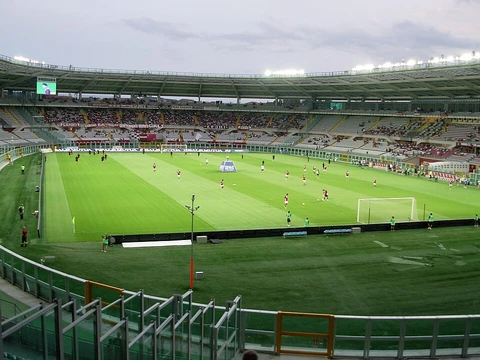
The afternoon light in Turin hung low and amber over the Gran Madre stadium, the kind of light that made the red of the Torino shirts look almost arterial. Bini stood at the left touchline, hands on his hips, watching the winger on the other side stretch the ball into a cross. He did not run until the moment the ball left the striker's foot. Then he was there, a wall of shoulder and timing, and the header sailed wide into the empty stands where a handful of old men sat in silence, still not quite able to fill the seats that should have been full.
He turned, jogged back to his position, and said nothing. He never said much. The man next to him, the centre-back, gave a short nod. That was the whole language of that era: *we're still here, we're still playing, we're still Torino.* Bini nodded back, reset his feet, and waited for the next ball to come. The crowd was thin that day. It was always thinner than it should have been. But it was there, and so was he.
Reader's Guide
Sergio Bini, left-back, Torino FC, 1950s. You will not find a statue of him in Piazza Solferino, and no chant in the modern Curva Sud carries his name the way it carries Mazzola's or Vargat's. But ask any Torino supporter of a certain generation about the early-to-mid fifties, about the years when the team was still a wound rather than a trophy collection, and Bini's name comes up as the one who *was there*.
His Torino years coincided with the most painful decade in the club's history. The Grande Torino was gone. The Superga plane had taken the architects of the 1946-47 Scudetto and the men who would have carried that identity forward. What replaced them was a squad assembled from necessity, and Bini was its left-back. He did not score goals that made headlines. He did not perform the kind of individual brilliance that gets you a poster. What he did was hold the left channel for years, in a league where the opposition knew Torino was fragile and came to punish that fragility.
Fans still reference him in the context of the rebuild. The Curva Sud's memory of that era is layered: grief, then stubbornness, then a slow return of pride. Bini represents the stubbornness. When a Torino fan says, "We were nothing after '49 and we came back," that 'we' includes Bini, week in and week out, doing the job no one applauds. He is the quiet architecture of a team's survival, and in a club whose history is defined by a single catastrophic loss, survival *is* the legend.
Did You Know?
- Bini's entire professional peak at Torino fell in the shadow of the 1949 Superga disaster, meaning his career was defined as much by what the club had lost as by what it was building.
- As a left-back in the 1950s, he operated in an era before the modern defensive line, meaning his positional discipline and one-on-one defending were the primary tools of the back four.
- Torino's post-Superga rebuilding spanned roughly a decade, and players like Bini were part of a transitional generation that carried the emotional weight of a city's grief onto the pitch every matchday.
- The 1946-47 'Grande Torino' Scudetto — the team destroyed at Superga — remains the emotional benchmark against which every subsequent Torino season is measured by fans, making the work of the 1950s rebuilders feel simult
More in Legendary Players
Elsewhere in the Torino FC universe
Spotted an error? Know more?
This is a living reference — every entry is fact-audited, and reader corrections feed straight into our audit queue. Suggest an edit · See this site's audit record