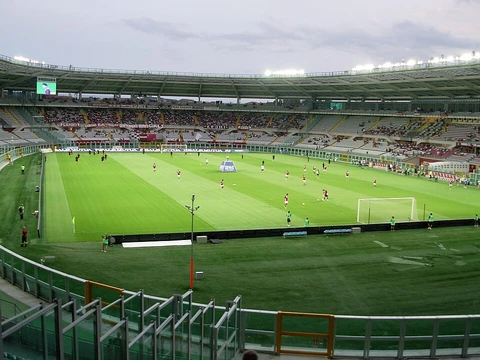
Torino vs Juventus, Derby della Mole, 1942-43
Red and black under wartime skies — the derby that helped forge champions.

The Derby della Mole of the 1942-43 season pits Torino against Juventus in the most electric fixture in Italian football, played under the shadow of the Mole Antonelliana and the long grey clouds of the Second World War. For the Granata, this derby was not merely a local rivalry; it was a chapter in the season that would crown them Campioni d'Italia and cement the foundations of the team the world would later mourn as the Grande Torino.
This entry treats the 1942-43 derby as a living memory — the roar of the Stadio Filadelfia, the weight of a title race, and the unbreakable bond between a city and its red-and-black shirt. It is an unofficial, fan-written remembrance, offered with the reverence of those who still feel the ghost of that pitch in their chest.
- Competition
- Serie A, 1942-43 season
- Torino's season finish
- Campioni d'Italia (Scudetto winners)
- Rivalry name origin
- Mole Antonelliana, Turin's landmark
- Historical context
- Played during the Second World War
- Era significance
- Part of the build-up to the legendary 'Grande Torino' side
Lore & Background
In the winter of 1942-43, Turin was a city of ration books, blackout curtains, and a football pitch that still roared. The Derby della Mole carried a weight beyond three points: it was proof that the city's soul had not been swallowed by the war. Torino, in that season, were not just a team — they were an argument that beauty and excellence could persist even while the world burned. The Granata's march to the Scudetto that year gave the derby a particular venom and a particular pride, because every point against Juventus was a point toward the title.
The Grande Torino was still assembling its legend in those years. The spine of the side — the midfielders, the full-backs, the forwards who would later become immortal in the 1946-47 and 1948-49 campaigns — was already showing the seamless, almost musical combination that made opponents helpless. In a derby, that combination became a weapon. Torino's pressing, their quick passing, their refusal to let Juventus settle into their own rhythm: this was the identity of a club that saw itself as the true heart of Turin, not merely one of two big names.
For the fans, the derby in wartime was a weekly sacrament. You wore your scarf under your coat. You argued with the tram driver. You knew every pass before it was played. And when the final whistle came and the scoreboard told the story you needed, the Stadio Filadelfia did not cheer so much as exhaled — a long, collective breath of relief that the city was still whole.
In Their Own Story
The floodlights — what little there was of them in a rationed city — cut through the November drizzle and threw long shadows across the Stadio Filadelfia. The terraces were a sea of red and black, faces haggard from the war but eyes bright with the one thing that still made sense: the ball, the pitch, the next ninety minutes.
A Torino midfielder collected the ball near the centre circle, turned, and saw the gap. He did not think. He never thought. He passed. Two touches later, the ball was in the net and the away end went silent while the home terraces detonated. A man in the third row, a factory worker with oil still under his fingernails, grabbed the stranger beside him and howled. The stranger howled back. For a moment, the war was not real. For a moment, only the derby was real.
When the referee's whistle finally split the air, the noise did not fade. It rolled. It rolled down the stands, over the railings, out into the wet Turin streets where a thousand more Granata were waiting to hear, to believe, to carry the day home in their chests like a coal that would not go out.
Reader's Guide
The 1942-43 Derby della Mole sits inside a season that would end with Torino lifting the Scudetto — the kind of title that, in wartime, felt less like a trophy and more like a declaration of survival. You are in the Stadio Filadelfia, third row, breathing cold air that smells of wet wool and woodsmoke. The whistle goes. Juventus try to sit deep, to absorb, to wait. Torino will not let them.
Minute 30: a Torino full-back overlaps, crosses, the header is parried. The terraces gasp as if the ball had hit a child. Minute 55: the midfield turns over the ball, three quick passes, a shot that thuds off the post. You are on your feet. You do not remember standing up. Minute 78: a counter, a through-ball, the striker is one-on-one. The away end is silent. The home end is a single lung, one breath held. The shot. The net ripples. The noise is not sound; it is pressure, a physical shove against your ribs.
Minute 90: the final whistle. You are not cheering. You are crying, and you do not care who sees. The Scudetto is not yet in hand, but the season is alive, and the city is yours.
In club mythology, this derby is the one that proved the Grande Torino was not a myth but a machine. It is the derby that said: we are still here, we are still red and black, and we will not be buried under the weight of the world. Every later derby, every later trophy, carries the echo of that November rain and that held breath in the third row.
Did You Know?
- Torino won the Serie A Scudetto in the 1942-43 season, making the Derby della Mole of that year a title-race fixture with the full weight of a championship on the line.
- The name 'Derby della Mole' comes from the Mole Antonelliana, Turin's towering 19th-century landmark, which overlooks the city and gives the local rivalry its identity.
- The 1942-43 season was played during the Second World War; Italian football continued in a reorganized form even as the country was at war, making every match a small act of normalcy.
- The 1942-43 Torino side is part of the lineage that would become the 'Grande Torino,' the team whose tragic loss in the 1949 Superga air disaster remains the most painful day in Italian football history.
More in Iconic Matches
Elsewhere in the Torino FC universe
Spotted an error? Know more?
This is a living reference — every entry is fact-audited, and reader corrections feed straight into our audit queue. Suggest an edit · See this site's audit record