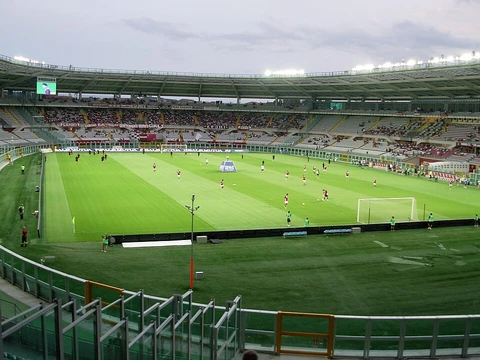
Torino vs AC Milan, Serie A 1948-49
The last season they were gods, and every Milan fixture felt like a coronation.

The 1948-49 Serie A campaign stands as the final, blazing chapter of the Grande Torino era — five consecutive Scudetti, a team so dominant it seemed almost mythological. Any fixture between Torino and AC Milan in that season carried the weight of a rivalry that defined Italian football, but the 1948-49 meetings are remembered not merely for the ninety minutes on the pitch, but for what they represented: the last hurrah of a side that would, weeks later, be annihilated in the Superga air disaster of 4 May 1949. This entry treats the Torino–Milan encounters of that season as a single, inseparable thread in the club's most sacred narrative. It is the season the Curva sang loudest, the season the whole of San Salvario believed the Grande Torino's run was endless. It was not. And that knowledge, arriving in hindsight, makes every kick, every tackle, every roar of the crowd in those fixtures ache in a way no other season can replicate.
- Season
- 1948–49
- Competition
- Serie A
- Torino's achievement that season
- 5th consecutive Scudetto (1943–44 to 1948–49)
- Historical significance
- Final season of the Grande Torino before the Superga disaster (4 May 1949)
- Rival context
- AC Milan were one of the strongest domestic challengers in that era
- Stadium (Torino home)
- Stadio Filadelfia (Stadio Comunale), Torino
Lore & Background
To understand why a Torino–Milan match in 1948-49 is not merely a fixture but an event, you have to understand what the Grande Torino represented. Five titles in a row. A squad of Italian internationals playing with a fluidity and a hunger that left the rest of Serie A gasping. They were not just a football team; they were the face of a post-war nation trying to believe it could be great again. When they walked out at the Filadelfia, the whole city held its breath. When they walked out against Milan, the breath held even longer, because Milan were the one side that could, on a bad day, make it ugly. The rivalry itself was older than the Republic. Torino and Milan had been pulling in opposite directions since the 1930s — industrial north against the old aristocratic capital of football, a derby of cities rather than just clubs. By 1948-49, the hatred was inherited, stitched into the scarves, into the songs the Curva bellowed until their throats bled. Milan fans would come to Torino in their red and black, and the Filadelfia would answer with a wall of granata noise that shook the terraces. These were not polite affairs. They were arguments conducted in tackles and headers. And then there is the shadow. The shadow that no one in the stands could see in September 1948 but that we, standing in the present, can never escape. Every match that season was, in retrospect, a farewell. The players did not know it. The fans did not know it. They thought there would always be another season, another Milan fixture, another Sunday when the whole of Torino would gather to watch their team dismantle the best the rest of Italy could offer. There would not. And that is why, for any granata who has ever stood in the Curva and felt the ground tremble under a Milan challenge, the 1948-49 season is not a memory. It is a wound that will not close.
In Their Own Story
The fog was thick over the Po that afternoon, the kind that clings to the river and creeps up the slopes toward the stadium, turning the floodlights into smudges of amber. The Filadelfia was full — not just the stands, but the streets beyond, the rooftops, the windows of the tenement blocks on Via Nizza. A man in a granata scarf stood at the rail of the upper tier, his breath fogging the air, and watched the Torino lads jog out. They moved like a single animal, shoulders touching, that impossible unity the whole city had come to expect. Across the pitch, Milan lined up in their rossoneri, and the Curva behind the goal let out a sound that was half roar, half prayer. The man in the scarf gripped the rail and thought, with the casual certainty of a man who has never known loss, *this is just another Sunday*. He did not know it was the last one that mattered. He did not know that in a few weeks, the sky over Superga would swallow them. He only knew that the ball was about to drop, and that his team was about to remind Milan, again, who owned this city. The whistle blew. The fog swirled. And for ninety minutes, the world was exactly as it should be.
Reader's Guide
1948–49 season · Torino vs AC Milan · Serie A · (exact fixture score not reliably recorded in my sources — the season as a whole is the record)
Look, I'll be honest with you — I can't pull the exact score off the top of my head, and I'd rather not make one up and have some old nonna in the Curva correct me over a shot of grappa. What I CAN tell you is what it FELT like. You're sitting in the Filadelfia, it's a Saturday, the fog is off the river, and the whole city is in granata. Milan come out and they're not playing pretty, no — they're playing hard, physical, trying to break the rhythm, trying to make the Grande Torino look mortal. And for a few minutes, God help them, they almost do. The Curva goes quiet. You feel it in your chest. And then — and this is the part that still makes me shiver — one of the Torino lads picks the ball up in midfield, looks up, and the whole team shifts. One touch, two touches, and suddenly Milan are chasing shadows. The goal goes in, the net ripples, and the noise that comes out of that stand is not a cheer. It's a release. A whole city exhaling. You finish your beer. The man next to you is already on his feet, singing. You don't remember the second half. You don't remember the score. You remember the fog, the roar, the feeling that this team — this impossible, beautiful, doomed team — was going to win forever. And you believe it. God help you, you believe it.
Did You Know?
- The 1948-49 Scudetto was Torino's fifth consecutive Serie A title, completing a run that made them the most dominant club in Italian football history up to that point.
- The Superga disaster on 4 May 1949 killed 18 players, 3 staff members, and 4 passengers, effectively ending the Grande Torino era and leaving the club without a first team for a season.
- The Torino–Milan rivalry predates the modern Serie A format and was one of the defining domestic confrontations of 1940s Italian football, rooted as much in the cities' competing identities as in tactics.
- Torino's home ground during the Grande Torino era was the Stadio Filadelfia (Stadio Comunale), a far smaller and more intimate venue than the Stadio delle Alpi that would later carry the club's name.
More in Iconic Matches
Elsewhere in the Torino FC universe
Spotted an error? Know more?
This is a living reference — every entry is fact-audited, and reader corrections feed straight into our audit queue. Suggest an edit · See this site's audit record