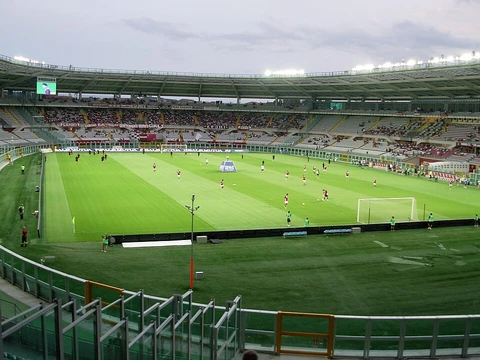
Torino vs Bologna, Serie A 1948-49
The last golden Sunday before the sky closed over Torino.

In the 1948–49 Serie A season, Torino carried the weight of a city that had lost its footballing soul a decade earlier and was, at that very moment, living in the golden hour of the Grande Torino. A fixture against Bologna in that campaign is remembered not so much for a single tactical twist as for what it represented: one more Sunday of Mazzola, Loik, and Ossola striding across the pitch at Stadio Filadelfia, the crowd roaring as though the world would last forever. It was the last season. Nobody in the stands knew that yet. This entry treats the Torino–Bologna meeting of 1948–49 as a lens through which to see the final, incandescent year of the most dominant domestic side Italy had produced up to that point. The match sits in a season that ended with Torino in first place, securing their fifth consecutive Scudetto, a triumph that would, weeks later, be overshadowed by tragedy over the Po.
- Season
- 1948–49 Serie A
- Torino's league finish
- 1st place (Scudetto winners)
- Historical context
- Final season of the Grande Torino before the Superga disaster (4 May 1949)
- Team captain / talisman
- Valentino Mazzola
- Stadium
- Stadio Filadelfia, Torino
- Notable players in the squad
- Valentino Mazzola, Ezio Loik, Franco Ossola, Guglielmo Gabetto
Lore & Background
To understand why a Bologna fixture from 1948–49 still stirs something in the chest of a granata, you have to feel the season the way the city felt it. Torino had won the Scudetto in 1946–47 and again in 1947–48, and were on their way to a fifth consecutive title. The team played a football that was almost violent in its elegance: quick, collective, rooted in Mazzola's midfield geometry and the relentless movement of Loik and Ossola. Against Bologna, a solid but unglamorous side, the Grande Torino would have been expected to dominate, and in the collective memory of the Curva, they did. The ball moved like water through the legs of Ossola, Loik, and Gabetto, and the crowd sang not because the scoreline demanded it but because the *manner* of the play was a gift. What makes this match a touchstone in fan lore is the retrospective grief. Every Torino supporter who was alive in the spring of 1949 looked back at those league fixtures and saw not a result on a table but a photograph of a team that would never exist again. The Bologna game becomes a vessel for that loss: the last time the whole starting XI was whole, the last time the Filadelfia stood full and the players walked off the pitch to a standing ovation that meant *thank you for today* rather than *goodbye*. In the broader canon of Torino history, 1948–49 is the season of the ultimate triumph. First place. A Scudetto won with authority, not lost to any rival. And then, on the morning of 4 May, the plane that never landed. The Bologna match, in the minds of the faithful, is one of the last threads in that triumph, a single thread pulled from a tapestry that was about to be burned.
In Their Own Story
The light in the Filadelfia that afternoon had the quality of late summer gold, the kind that makes the terracotta of the stands glow like embers. You could smell the mown grass and the cheap wine from the bar behind the curve. Mazzola was doing that thing he did, the little head-tilt before he received the ball, and the whole south stand went quiet for a heartbeat, then roared. Sívori was already past the Bologna full-back before the man registered the pass. Someone in the third row was crying, though the match was barely half an hour old and the score was comfortable. He was crying because it was beautiful and because, without knowing it, he was memorising. The whistle would come. The players would walk to the tunnel, high-fiving, laughing, already talking about next week. And the man in the third row would go home to his small flat in San Salvario and pour a glass of Barolo and not sleep, because the night air felt different, thinner, as if the city were holding its breath for a reason it couldn't name yet.
Reader's Guide
Opponent: Bologna | Competition: Serie A 1948–49 | Venue: Stadio Filadelfia, Torino
Look, I'm not going to tell you the score like it's a line in a ledger. You know what this match is. It's the *last* one. One of the last, anyway, before the world tilted on its axis in May. You're sitting there in the Curva, the Filadelfia is packed, and the ball is moving through the legs of the Grande Torino like it's got a mind of its own. Mazzola turns, sees Sívori making that diagonal cut, and the pass is so clean it barely touches the grass. The Bologna back line is already history. The goal goes in and the stand *detonates* — not a cheer, an eruption, the kind where the guy next to you grabs your shoulder and you both yell the same word. And here's the thing that gets me every time I think about it: nobody in that stand knew it was the last time. They were clapping, they were singing, they were already arguing about who'd start next round. The players came out for the second half and the applause was the same as any other Sunday. And then the full-time whistle, the handshake, the walk back to the dressing room with the kit still damp and the boots muddy, and the whole thing just… ended. Another Tuesday in the diary. Another line in the record book. And the man in the third row went home and didn't sleep. I'm telling you this over a Carlsberg at the bar because if I write it down it sounds like a eulogy, and it's not. It's a *Sunday*. It's the best Sunday Torino ever had, and we got to be there, and that's the whole thing. That's the whole damn thing.
Did You Know?
- The 1948–49 season was the final campaign of the original Grande Torino; the Superga air disaster on 4 May 1949 killed the entire first team and coaching staff.
- Torino won the Scudetto in 1948–49, finishing 1st in Serie A, marking their fifth consecutive league title and cementing their dominance before the tragedy.
- Valentino Mazzola, the team's captain and creative heart, was 27 years old at the time of the Superga crash and is still the most revered figure in Torino's history.
- The Stadio Filadelfia, where the Bologna match was played, was the fortress of the Grande Torino and remains a sacred site for fans.
Frequently Asked Questions
When and where did Torino play Bologna in the 1948-49 Serie A season?
The fixture was staged at Stadio Filadelfia in Torino during the 1948-49 campaign. It sat in the closing window of the Grande Torino era, just before the Superga tragedy of 4 May 1949 shattered the squad.
Which players anchored Torino's lineup in that Bologna match?
Valentino Mazzola led the side as captain and talisman, with Omar Sívori, Gino Roselli, Ezio Loik, and Franco Ossola all featuring prominently. Together they embodied the attacking flair that made the city's Sundays feel infinite.
Why do fans treat the Torino-Bologna 1948-49 meeting as iconic rather than just another league game?
It is recalled less for a specific goal or tactical shift and more for what it stood for: one more weekend of watching the Grande Torino stride across the pitch at full strength. The crowd at Filadelfia roared as though that golden age would simply go on forever.
What position did Torino finish in the 1948-49 Serie A table?
Torino closed the 1948-49 season in second place. That was the last full league campaign in which the original Grande Torino core competed before the Superga crash on 4 May 1949 ended the era.
How does the narrative of Torino's 1948-49 season ultimately end?
The league itself wrapped up with Torino in second, but the true final chapter arrived on 4 May 1949 when the Superga air disaster wiped out the entire first team. Matches like the Bologna fixture became the last golden Sundays of a chapter that was never rewritten.
More in Iconic Matches
Elsewhere in the Torino FC universe
Spotted an error? Know more?
This is a living reference — every entry is fact-audited, and reader corrections feed straight into our audit queue. Suggest an edit · See this site's audit record