Grande Torino
Eighteen boys, one hill, a city that never stopped singing.

via Wikipedia: Grande Torino · see source
The Grande Torino (Italian for 'Great Torino') was the historic Italian football team of Torino Football Club in the 1940s, five-time champions of Italy, whose players were the backbone of the Italy national team and died on 4 May 1949, in the plane crash known as the Superga air disaster. With this name, although it is commonly used to identify the team that died in the disaster, it defines the entire sports cycle which lasted eight years and led to the conquest of 5 consecutive championships, equaling the record previously set by Juventus of the Quinquennio d'oro; Grande Torino also won a Coppa Italia.
- Era
- Mid-1940s to 4 May 1949
- Tragedy
- Superga air disaster, 4 May 1949 — entire squad, staff, and crew lost
- Nickname
- I Granata / La Squadra della Morte
- Club colours
- Granata (dark maroon-red)
Verified Timeline
Lore & Background
The team that became the Grande Torino was built piece by piece by president Ferruccio Novo, who took over in the summer of 1939. Novo was not a patron but a careful administrator who had played for Torino as a subpar player in 1913. His first hit was purchasing 18-year-old Franco Ossola from Varese for 55 thousand lire, who debuted on 4 February 1940 in a 1–0 win against Novara. For the 1941–42 season, Novo brought in five new players: Ferraris II from Ambrosiana for 250,000 lire; Romeo Menti from Fiorentina; and Alfredo Bodoira, Felice Borel and Guglielmo Gabetto from Juventus. Gabetto was purchased for 330,000 lire after Borel revealed Juventus considered him 'finished' and planned to sell him to Genoa for 300,000 lire. The turning point came when Borel, Ellena and Copernicus suggested Novo adopt the sistema tactic, a 3–2–2–3 formation developed by Englishman Herbert Chapman. Novo approved and hired Hungarian manager András Kuttik. The 1941–42 season saw two defeats against Venezia, led by Ezio Loik and Valentino Mazzola, cost Torino both the Coppa Italia and the league title. After the last defeat, Novo went to the Torino dressing room and signed Mazzola and Loik on the spot for a combined 1,400,000 liras. Juventus was also pursuing the two players, but Novo's determination thwarted their plans. Thus was born the team that would become legendary as the Grande Torino. In 1944, with Italy devastated by war, Torino found collaboration with FIAT, creating FIAT Torino. Players like Mazzola were classified as workers in the automobile factory to exempt them from the front. The team beat 7–1 Genoa and Biella, 7–0 Alexandria, 8–2 Novara and Juventus 5–0 in the group stage.
In Their Own Story
The fog came in off the Po at half past five, thick as wool, swallowing the trams and the neon of Via Po. In the Curva Maratona, old Beppe lit a candle on his phone screen and held it up. Around him, three hundred men in granata scarves stood in the dark, no drums, no chanting. Just the smell of cold concrete, of the grass beyond the advertising boards still damp from the afternoon rain, and the low hum of a city holding its breath. Someone whispered a name — Valcareggi, Mazzola, Loik — and the whisper became a murmur, then a roar that rolled up the hill toward Superga, toward the church where the light went out in 1949. Beppe did not look away. He never had.
Reader's Guide
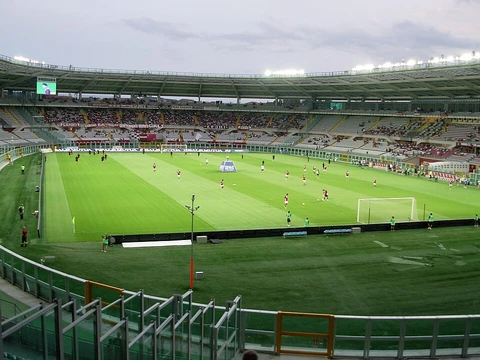
The ground has worn many names. Torino first called home the Stadio Filadelfia in the early 1920s, a modest concrete bowl where the smell of wet chalk and cut grass hung thick in Piedmont air. On a Derby della Mole night the Curva Maratona — the ultras in the south stand — rise as one. Drums thunder. The smell of pyrotechnics, of cheap wine, of a thousand bodies pressed together, fills the concrete. They sing of the '49, of the boys who never came home, and the whole stadium falls silent for a heartbeat before the roar swells again. Turin is a city of factories and fog, of Fiat assembly lines and the Mole Antonelliana piercing the low sky. Its people are proud, reserved, a little melancholic — and so is their club. The granata shirt is not just a colour; it is a scar worn openly, a refusal to let the dead be forgotten.
Did You Know?
- Ferruccio Novo, who built the Grande Torino, had played for Torino himself in 1913 and described himself as 'a duffer' as a player.
- Franco Ossola, the first piece of the Grande Torino squad, was purchased from Varese for just 55 thousand lire at age 18.
- Valentino Mazzola and Ezio Loik were signed by Novo directly in the Torino dressing room after a defeat to Venezia, for a combined 1,400,000 liras.
- During World War II, Torino players were classified as FIAT factory workers to avoid being called to the front, with photos showing them on lathes and machine tools.
- The team beat Juventus 5–0 in the 1944 war championship group stage.
More in Stadium & Culture
Related in Torino FC
Links follow this subject's own source article.
Elsewhere in the Torino FC universe
Spotted an error? Know more?
This is a living reference — every entry is fact-audited, and reader corrections feed straight into our audit queue. Suggest an edit · See this site's audit record