Il Toro
A bull built in a factory city, scarred by the sky, still charging.

via Wikipedia: Torino FC · see source
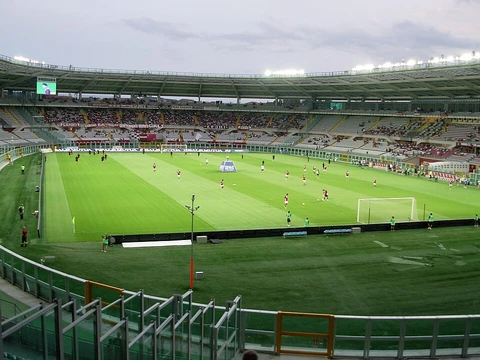
Il Toro is not merely a nickname; it is the living, breathing identity of Torino Football Club and the city that forged it. Born from the industrial heart of Piedmont, the bull has carried the weight of triumph, tragedy, and an almost sacred pride since the club's founding in 1906. It is the roar in the terraces, the maroon scarf wrapped tight against the Alpine cold, the unbroken thread connecting the ghosts of Superga to the fans who still fill the stands every Saturday. The stadium itself — first the intimate Stadio Filadelfia, now the vast bowl of the Stadio Olimpico Grande Torino — is the physical anchor of that identity. But the true home of Il Toro is the culture surrounding it: the ultras, the songs, the derby that splits a city in two, and the melancholic beauty of a place that built empires of steel and then mourned its sons in the sky.
- Nickname
- Il Toro (The Bull)
- Founded
- 1906
- Home colours
- Granata (Maroon)
- Previous home ground
- Stadio Filadelfia (1923–1990)
- Current stadium
- Stadio Olimpico Grande Torino
- City rivalry
- Derby della Mole (vs Juventus)
- City
- Torino, Piedmont, Italy
Lore & Background
To understand Il Toro is to understand Torino the city: a place of smokestacks and Fiat assembly lines, of workers who built Italy's industrial backbone and then demanded their team play with the same unyielding, muscular pride. The bull was never a delicate creature. It is the granata shirt, the low guttural chant, the refusal to be overshadowed by the richer neighbour across the Mole Antonelliana. Torino FC's golden era in the 1940s and early 1950s — a string of league titles that made the city believe in its own greatness — was followed by the catastrophe of 4 May 1949, when the team perished in a plane crash on the hill of Superga. That wound never fully closed. It became part of the identity, a sacred grief that the ultras carry in every song, every flare, every season. The stadium history mirrors this arc. Stadio Filadelfia, opened in 1923, was a workingman's ground: close to the pitch, loud, intimate. For nearly seventy years it was the only home Il Toro knew. When the 1990 World Cup demanded a new, larger arena, the club moved into what would become the Stadio delle Alpi, later renamed Stadio Olimpico Grande Torino. The architecture changed, but the soul did not. The ultras — organized under the banner of Bastion 1923 — rebuilt their fortress in the new terraces, carrying with them the songs, the flags, and the memory of every name lost at Superga. The rivalry with Juventus, the Derby della Mole, is less a football fixture than a civic ritual. Two halves of the same city, divided by class, by history, by the simple fact that one wears white and the other wears the colour of dried blood. On derby days, Torino becomes a different animal. The air tastes of sulfur and cheap beer. The bull does not charge; it rams.
In Their Own Story
November. The kind of cold that finds the gap between your scarf and your jaw and stays there. He smells it before he sees it: cut grass, wet concrete, the faint metallic tang of the floodlights warming up. The terraces are half-full, a sea of granata, and someone in the row ahead is already singing — low, off-key, the old Superga song that makes the back of his neck prickle. He drops his bag, finds his spot between his father's old friend and the kid who's never seen a derby without a phone in hand. The pitch below is green and indifferent. The Mole glows faintly in the distance, a needle stitching the sky. Marco pulls his scarf over his nose. The singing swells. The bull stirs.
Reader's Guide
The physical story begins in 1923, when Stadio Filadelfia opened its gates to a city of factory workers and gave Il Toro a home that felt like an extension of the workshop: close, loud, unpretentious. For nearly seven decades, that was Torino. Then the 1990 World Cup reshaped the city's sporting geography, and the club moved into the vast Stadio delle Alpi — later renamed Stadio Olimpico Grande Torino — a modern bowl that swallowed the intimacy of the old ground but inherited its soul. The people, though, are the real architecture. Bastion 1923, the ultras collective, treats the terraces as a cathedral. Their songs are not choreographed; they are inherited, passed down like recipes, often referencing the Superga dead by name. On a derby night, the atmosphere shifts from pride to something almost violent: flares, coordinated drums, a wall of sound that vibrates in the sternum. The air smells of sulfur and wet wool. Torino the city mirrors this perfectly. It is a place of proud, slightly melancholic industry — the Fiat works, the fog rolling off the Po, the quiet dignity of a city that built a nation and then lost its best sons to a hillside. Il Toro is not glamorous. It does not need to be. It is the bull in the factory yard, scarred, patient, and absolutely unbreakable.
Did You Know?
- The Superga air disaster of 4 May 1949 killed the entire first team and most of the coaching staff, becoming the defining tragedy of Italian football and an eternal wound in the club's identity.
- The Derby della Mole takes its name from the Mole Antonelliana, the city's iconic landmark, which stands as a silent witness between the two halves of Torino.
- Stadio Filadelfia served as Torino's home ground for approximately 67 years (1923–1990), making it one of the longest-tenured club grounds in European football.
- The nickname 'Il Toro' and the bull motif predate modern football culture in the city, drawing on Torino's identity as an industrial, working-class metropolis in Piedmont.
More in Stadium & Culture
Related in Torino FC
Links follow this subject's own source article.
Elsewhere in the Torino FC universe
Spotted an error? Know more?
This is a living reference — every entry is fact-audited, and reader corrections feed straight into our audit queue. Suggest an edit · See this site's audit record