Torino
Seven titles, one morning in May, and a city that never stopped believing in the bull.

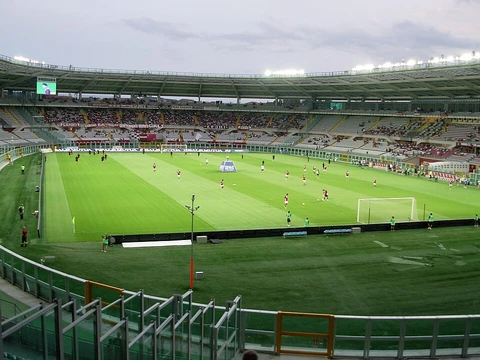
Torino Football Club, known to the world as Il Toro and to its own faithful simply as I Granata, is one of Italian football's oldest and most emotionally scarred institutions. Founded in 1906 in the industrial city of Turin, the club's identity is inseparable from the city itself: working-class, proud, and shadowed by a tragedy that no amount of silverware can fully heal. The Superga air disaster of 1949, which destroyed the legendary 'Grande Torino' squad in a single morning, remains the axis around which every subsequent season, every chant, every derby turns. Today the team calls home the Stadio Olimpico Grande Torino in the Santa Rita district, a modern bowl built for the 1990 World Cup that replaced the beloved Stadio Filadelfia. Yet the soul of the club lives in the Maratona end, in the granata scarf wrapped tight against the November cold, and in a city that still measures its own pride against the bull on the crest.
- Founded
- 1906 (as Foot-Ball Club Torinese)
- Home ground
- Stadio Olimpico Grande Torino, Turin, Italy
- Nickname
- Il Toro (The Bull) / I Granata
- Colours
- Granata (dark maroon-red) and white
- Serie A titles (Scudetti)
- 7 (1927, 1928, 1943, 1946, 1947, 1948, 1949)
- Defining tragedy
- Superga air disaster, 4 May 1949
- Rivalry
- Juventus FC — 'Il Derby della Mole'
Lore & Background
The story of Torino FC is, at its core, a story interrupted. In the late 1940s the 'Grande Torino' — a side built on the talents of Valentino Mazzola, Eusebio, and a constellation of players who made the granata shirt seem almost sacred — dominated Italian football, winning five consecutive Scudetti. They were the team every other club feared and every fan secretly admired. Then, on the morning of 4 May 1949, their plane struck the hill of Superga on the way back from a friendly in Lisbon. Every player, every member of the coaching and support staff, was killed. The city of Turin, which had just emerged from the war, lost not a team but a generation's worth of hope in a single, silent impact. What followed was a long, slow reconstruction that never quite reached the heights of the pre-war era. The club won its seventh and, to date, final Scudetto in that same 1948-49 season, but the post-Superga Torino was a different animal: resilient, occasionally brilliant, but perpetually haunted. The rivalry with Juventus, born of proximity and class, became the emotional centre of the club's identity. 'Il Derby della Mole' — named for the great dome of the Mole Antonelliana that watches over the city — is less a football match than a civic ritual, a weekly reaffirmation that the granata side of Turin still stands. The ultras culture in the Maratona end is the living memory of all this. Their songs are not the elaborate choreographies of some other scenes; they are direct, almost liturgical. The repeated cry of 'Torino, Torino, Torino' is less a cheer than a prayer. The 'Mossa,' a coordinated wave of movement through the lower stand, is performed with the solemnity of a procession. On the rare occasions the team rises to challenge for silverware, the atmosphere in the stadium shifts from endurance to something almost dangerous, as if the city is finally letting go of sixty years of held breath.
In Their Own Story
The rain had started before kickoff, the way it always does in Turin in October — not a storm, just a slow, grey surrender of the sky. In the Maratona end, a man in his seventies pressed his face against the plastic barrier and watched the granata shirts materialise from the tunnel, and for a moment he was nine years old again, standing on the concrete steps of the old Filadelfia, his father's scarf too long around his neck, the smell of wet wool and cheap coffee thick in the air. The anthem came up from below, low and grinding, and the man closed his eyes. He did not need to see the pitch. He could feel the ball in the air, could hear the thud of it against the net, could smell the cut grass after the match when the gates opened and the city swallowed the players whole. He opened his eyes. The bull was still charging. The road was still long. He pulled his scarf tighter and waited for the next verse.
Reader's Guide
The old Stadio Filadelfia, opened in 1923 in the working-class quarter of that name, was where the club lived for sixty-seven years. You could smell the damp concrete, the chalk lines, the cheap tobacco of the lower terraces. When the new ground rose in Santa Rita for the 1990 World Cup, the city mourned a piece of its soul. The modern Stadio Olimpico Grande Torino is cleaner, larger, but the Maratona end still roars like the old days. The ultras in that lower curve have carried the club through decades of mediocrity and heartbreak. Their songs are simple, almost hymn-like: "Torino, Torino, Torino" chanted until the lungs burn, the "Mossa" rising in coordinated waves. On a Derby della Mole night, the air in the stadium tastes of iron and cold November rain. Twenty-eight thousand voices become one, and for ninety minutes the grey city forgets its grief. Turin itself is the club's mirror: industrial, proud, a little sad. The Mole Antonelliana looms over the skyline like a question the city never quite answers. The factories closed, the workers aged, but the granata shirt still means something here. It means you stayed. It means you remember Superga. It means the bull still charges, even when the road is long.
Did You Know?
- The derby against Juventus is called 'Il Derby della Mole' after the Mole Antonelliana, the great iron-and-glass dome that has dominated Turin's skyline since the 1890s.
- The club was originally registered in 1906 as 'Foot-Ball Club Torinese,' a name reflecting the sport's English origins, before becoming Associazione Sportiva Torino in 1907.
- The Superga tragedy of 4 May 1949 killed every player and staff member on board; the club's subsequent reconstruction is considered one of the most remarkable comebacks in European football history.
More in Stadium & Culture
Elsewhere in the Torino FC universe
Spotted an error? Know more?
This is a living reference — every entry is fact-audited, and reader corrections feed straight into our audit queue. Suggest an edit · See this site's audit record