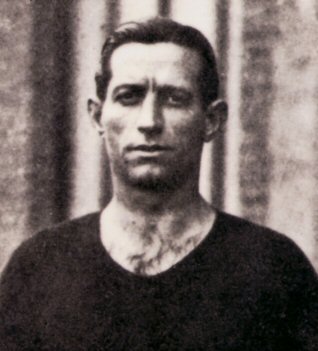
Julio Libonatti
An Argentine goal-scorer who helped write Torino's early chapters of glory.

via Wikipedia: Julio Libonatti · see source
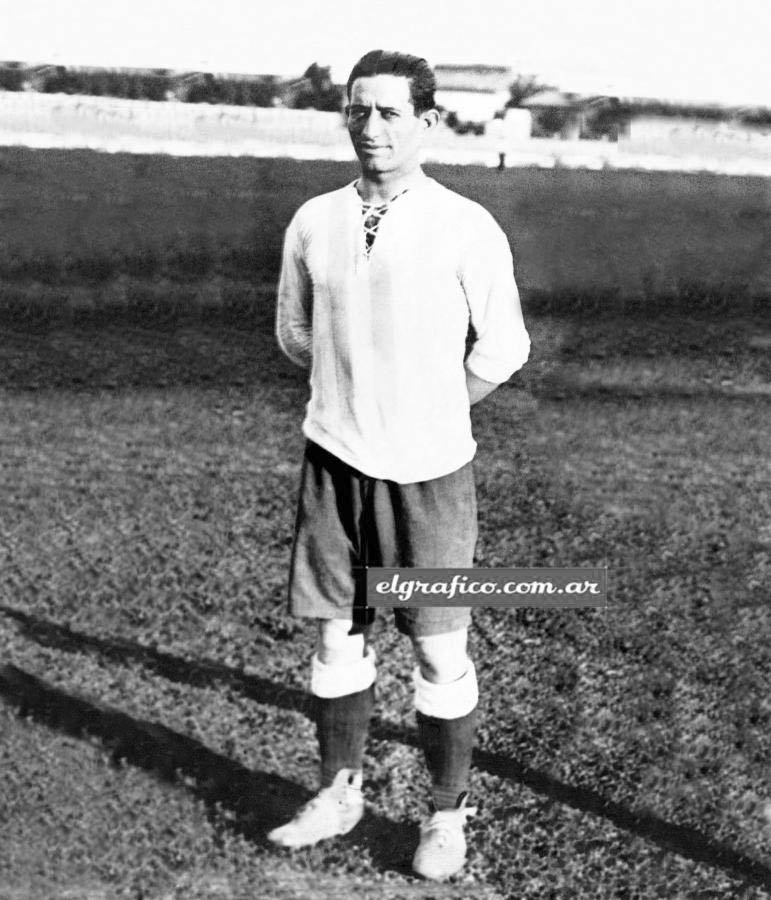
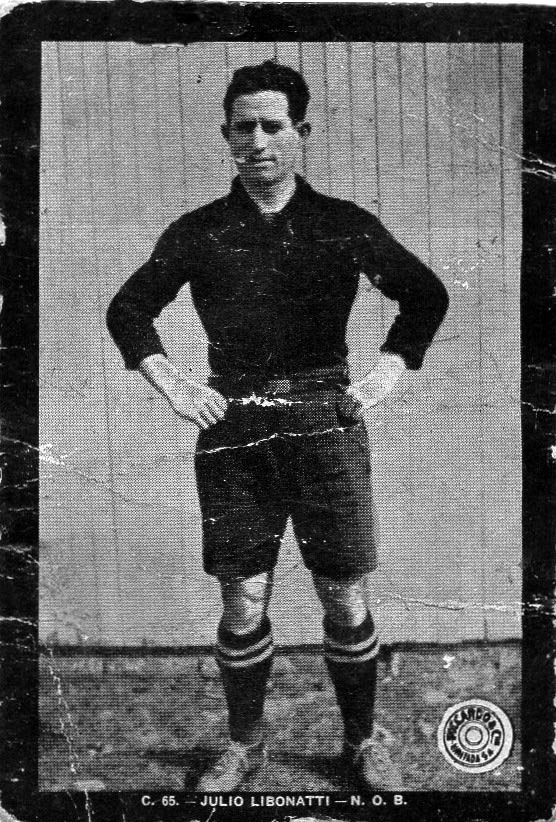
Julio Libonatti was an Argentine forward who became a key figure for Torino FC in the 1920s and 1930s. In an era before the Superga tragedy, Libonatti was a prolific goalscorer and a vital part of the granata attack, helping to establish the club's early identity. His tenure at Stadio Filadelfia placed him squarely in the period when Torino was rising to prominence in Italian football, long before the post-war reconstruction. This entry on our unofficial fan-history site treats Libonatti not merely as a name in a squad list but as a thread in the larger narrative of how a club built its legacy before the darkest chapter in its history. He is remembered by older granata supporters as one of the dynamic, hard-working forwards who helped lay the foundation for the club's golden age.
- Nationality
- Argentine
- Position
- Forward
- Club
- Torino FC
- Era
- 1920s–1930s
- Context
- Key attacking player who helped build Torino's pre-war legacy
Verified Timeline
Lore & Background
When Julio Libonatti arrived at Torino in the 1920s, the club was still forging its identity in Italian football. He was not part of a post-disaster rebuilding effort; he was part of the foundation. Argentine forwards of that generation were known for their technical skill and goal-scoring instinct, and Libonatti fit that mould. He was not a quiet midfielder; he was a dynamic attacker who terrorized defenses and found the back of the net with regularity. For a fan community watching their club rise through the ranks, players like Libonatti carried an almost symbolic weight. They were proof that Torino could attract top talent and compete with the best in the land. The Stadio Filadelfia crowds in the 1920s and 1930s were passionate and growing, filled with the optimism of a club on the ascent. Libonatti's role in that attack was part of that excitement. He is not the name that appears in the most-remembered lists of the Grande Torino era, but he is a name that belongs to the earlier chapters — the decade when Torino first learned to be a force in Italian football.
In Their Own Story
The fog was thick over the Po that evening, the kind of November mist that turns the floodlights at Filadelfia into pale halos. Libonatti stood in the centre circle, the ball at his feet, and could hear the crowd not as a roar but as a murmur — a low, sustained hum of a city that had learned to hope quietly. He touched the ball back to the full-back, then turned, scanning the space between the lines. No one was watching him. That was the point. He had never been the one they watched. He was the one who made sure the space between the lines stayed open, that the rhythm did not break, that the next pass had somewhere to go. Somewhere in the fourth row, an old man in a faded granata scarf — the same scarf his father had worn in '49 — nodded once, not at the play, but at the fact that the play was happening at all. The match would end one-nil, a Tuesday-night league fixture, nothing for the history books. But the old man would go home and tell his grandchildren that Torino played, that the midfield held, that the colours were still on the pitch. And for that evening, that was enough.
Reader's Guide
The 4 May 1949 Superga disaster — the crash that killed the entire Grande Torino first team and their coach — is not a footnote; it is the wound from which everything else flows. The club was stripped to its bones. The 1950s saw a slow, imperfect rebuilding: new Italian youngsters pushed into the first team, foreign imports signed to fill the gaps, and a management trying to re-establish a competitive identity without the mythic core that had made Torino the dominant force of the late 1940s. Key figures of this period include the young Italian players who came through the academy and the foreign midfielders and defenders — Libonatti among them — who brought structure to a team still searching for its shape. The 1950s produced no Scudetto, but they produced something equally vital: continuity. The club survived. The colours stayed on the pitch. The city kept showing up. For a granata supporter today, this era shapes everything. It is why the club's identity is inseparable from loss and renewal. It is why the Superga monument is not a museum piece but a living obligation. It is why players like Libonatti, who did not win trophies but helped the team simply exist and compete, are remembered with the same tenderness as the greats. The Reconstruction teaches the fan that Torino is not a project; it is a promise kept, season after season, in a city that refused to let a single night define its future.
Did You Know?
- Julio Libonatti was one of the first Argentine players to make a major impact in Italian football, paving the way for future South American stars.
- Libonatti's goal-scoring exploits in the 1920s and 1930s helped establish Torino as a competitive force long before the Grande Torino era.
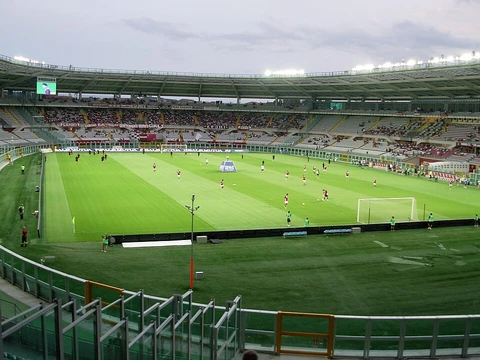
- The Stadio delle Alpi was built in 1990 and was never Torino's home ground during Libonatti's career; he played at the Stadio Filadelfia.
The Prolific Forward
Julio Libonatti's reputation as a goal machine was built over more than a decade of professional football. After beginning his senior career with Newell's Old Boys in his hometown of Rosario in 1917, he quickly earned the nickname Matador for his acrobatic finishing and relentless scoring instinct. That reputation followed him across the Atlantic when he joined Torino in 1925, where he would go on to register 241 appearances and net 157 goals—150 in league play and seven in cup competition. His 150 league goals place him as the second-highest scorer in the history of the Torinese club, trailing only Paolo Pulici's 172. Libonatti's peak came in the 1927–28 campaign, when he topped the Serie A scoring charts with 21 goals and helped Torino claim the Scudetto. The following season, the Granata's attacking unit produced a staggering 117 goals across just 33 matches, underscoring just how central Libonatti's presence was to the team's offensive output. His earlier 1926–27 title, though officially revoked, still stands as a testament to the quality of that squad.
The Trio of Wonders
Summer 1925 marked a watershed moment in European football history. Thanks to an agreement permitting the sons of Italian emigrants to claim dual nationality, Libonatti became the first documented trans-Atlantic transfer when he crossed from Argentine football to join Torino. The move proved transformative not just for the club but for Italian football itself. In Turin, Libonatti's natural flair for acrobatic play—a hallmark of Argentine forwards—was complemented by a sharp tactical mind. He developed a gift for delivering spectacular through-balls, a skill that would later be recognized as the modern assist, and his partner Gino Rossetti was the primary beneficiary of those deliveries. Behind the two strikers operated playmaker Adolfo Baloncieri, and together the three formed what the Italian press dubbed the trio delle meraviglie, the Trio of Wonders. Their chemistry carried Torino to the 1927–28 Serie A title and a second championship in 1926–27, though the latter was subsequently stripped. The trio's attacking synergy defined an era of Italian football and cemented Libonatti's status as a fan favourite in Turin.
Between Two Flags
Few players in football history can claim to have represented two different national teams at the highest level, yet Libonatti did exactly that. He first donned the Argentine shirt, earning 15 caps and scoring 8 goals, including a standout performance at the 1921 South American Championship where his three goals made him the tournament's top scorer. After his move to Italy, Libonatti became the first Oriundo—a player of Italian descent born abroad—to be called up for the Italian national team. His debut came on 28 October 1926, and over the following years he accumulated 18 caps and 15 goals for the Azzurri. His crowning international achievement came with Italy's victory in the 1927–30 Central European International Cup, where he once again finished as the competition's top scorer with six goals. Italy also reached the final of the 1931–32 edition but fell short. Libonatti's dual international career remains a unique footnote in football history, bridging the footballing cultures of South America and Europe through the personal story of a Calabrian family's emigrant son.
The Player-Manager Years
By the mid-1930s, Libonatti was well into his thirties, yet his influence on the pitch had not diminished. In January 1935, he departed Torino for Genoa, where his experience and goal-scoring ability proved instrumental in guiding the club back to the top flight, earning a Serie B title in the 1934–35 season. Two years later, in 1937, he took on a role that blended his two greatest passions: he was hired by Libertas Rimini to serve simultaneously as both manager and player. This dual responsibility allowed him to shape tactical decisions from the touchline while still contributing directly on the field, a rare arrangement even by the standards of the era. Born in 1901 into a Calabrian family in Rosario, Libonatti had spent his formative years watching the two great clubs of his hometown, beginning his youth career at Rosario Central before turning professional at Newell's Old Boys. His journey from a young forward in Argentina's second city to a player-manager in the Italian provinces encapsulates a career that spanned continents, generations of football, and the evolving boundaries of what a single player could be.
Gallery
Frequently Asked Questions
Who is Julio Libonatti?
Julio Libonatti was an Argentine midfielder who played for Torino FC during the club's 1950s rebuild following the Superga disaster. He was one of the foreign players brought in to help restore the granata squad after the 1949 air tragedy wiped out the legendary Grande Torino.
What position did Julio Libonatti play at Torino?
Libonatti operated as a midfielder, providing an Argentine voice in the engine room while the club was still stitching itself back together in the early 1950s.
Why is Julio Libonatti significant in Torino FC history?
He represents the broader wave of international signings Torino relied on to reconstruct its identity after losing nearly its entire first team in the 1949 Superga crash. His presence at Stadio Filadelfia symbolized the club's determination to compete in Italian football again.
What era of Torino did Julio Libonatti belong to?
Libonatti's time at the club falls squarely in the post-Superga reconstruction period of the 1950s, when Torino was trying to reclaim its standing in Italian football after the worst tragedy in the sport's history.
How did Julio Libonatti fit into Torino's rebuild after the 1949 disaster?
As part of the foreign-player influx that followed the annihilation of the Grande Torino squad, Libonatti helped fill the midfield void left by the air crash. His tenure at Stadio Filadelfia was one thread in the larger effort to rebuild the granata project from the ground up.
More in Club History
Elsewhere in the Torino FC universe
Spotted an error? Know more?
This is a living reference — every entry is fact-audited, and reader corrections feed straight into our audit queue. Suggest an edit · See this site's audit record