Derby del Sole
Two Turins, one city, a century of granata defiance against bianconeri gold.

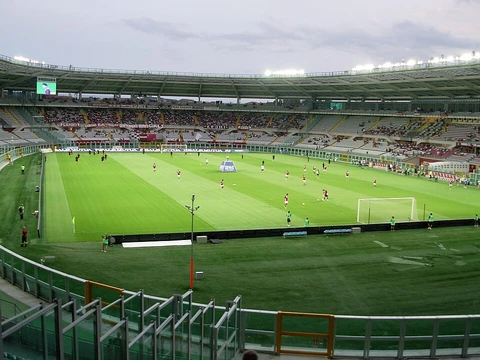
The Derby del Sole — more commonly known in Italian football parlance as the Derby della Mole or simply Il Derby — is the fierce, century-old rivalry between Torino FC and Juventus FC, two clubs born in the same industrial city of Turin yet separated by class, identity, and a history of triumph and tragedy. It is not merely a fixture in the calendar; it is a collision of two Turins, the granata working-class soul against the bianconeri cosmopolitan establishment, played out every few months under the lights of the Stadio Olimpico Grande Torino or the Allianz Stadium.
For fans of the Granata, the derby is the one match that still makes the chest ache with pride and fury in equal measure. Torino's four Scudetti, the ghost of the Grande Torino, the defiant 1975-76 title charge — all of it is measured, ultimately, against the shadow of the club next door. This is the rivalry that defines what it means to be a Toro supporter: to be the underdog who refuses to kneel.
- Clubs
- Torino FC (Granata) vs Juventus FC (Bianconeri)
- City
- Turin (Torino), Piedmont, Italy
- Torino founded
- 1906
- Juventus founded
- 1897
- Torino Serie A titles
- 4
- Juventus Serie A titles
- 36
- Torino nickname
- Granata / I Toro
Lore & Background
The rivalry was born in the smoke and steel of early-twentieth-century Turin, when the city was Italy's industrial heart and football was the great democratic theatre. Juventus, founded by a group of students and quickly embraced by the bourgeoisie, wore black and white and projected an image of continental sophistication. Torino, arriving a few years later in the unmistakable granata of the local textile dye-works, became the club of the Fiat workers, the dockers, the people who built the city's factories. From the first whistle, the two sides represented two different answers to the question: what is Turin?
No other event in Italian football history has shaped a rivalry quite like the Superga air disaster of May 19, 1949. The Grande Torino — the team that had just won back-to-back Scudetti and was the most dominant side in Europe — perished when their aircraft struck the hill of Superga. Valentino Mazzola, the young captain, and nearly the entire squad were gone. The city was shattered. In the years that followed, every derby carried the weight of that loss; Torino supporters walked into the stadium knowing that their club had been a giant once, and that the club next door had simply continued. The grief became identity. The derby became a place to say: we remember, and we are still here.
The 1975-76 season, when Vujadin Boškov's Torino stormed to the Scudetto in a thrilling three-way finish, remains the high-water mark of granata joy. For a brief, electric moment, the city belonged to the workers' club. The derby that season was less a match than a referendum on who Turin truly was. Even now, decades later, when a Toro supporter hears the derby announced, the echo of that title run still thrums in the chest like a second heartbeat.
In Their Own Story
The fog came in off the Po just before kickoff, curling around the floodlights of the Olimpico like grey silk. In the Curva Sud, a man in his seventies pressed his face to the cold iron railing, his granata scarf wrapped three times around his neck. He had not missed a derby in fifty-two years. Beside him, his granddaughter in a borrowed Torino jersey asked, 'Nonno, why do you cry before the match?' He did not answer. He was thinking of 1949, of a name he could not say aloud, of a city that had lost its best team to a mountain and a sky. The whistle blew. The Bianconeri pressed forward, clinical, inevitable, as they always were. And then — a long ball, a header, a scramble in the box, and the net rippled. The Curva Sud detonated. For eleven seconds, Turin was granata. Then the fog closed in again, and the man wiped his eyes, and the granddaughter understood that some grief is not a wound but a foundation, the bedrock on which a city builds its identity one derby at a time.
Reader's Guide
The Derby del Sole is, above all, a rivalry of identity within a single city. Torino is the club of the granata worker, the Fiat assembly line, the Curva Sud's raw, unpolished passion. Juventus is the club of the black-and-white stripe, of continental ambition, of a boardroom that has always looked outward to Europe while Torino looked inward to the city. They share a postal code, a dialect, a skyline — and yet they occupy different social worlds. That 'same-city, different-world' tension is unique in Italian football; no other derby in Serie A carries the weight of two clubs being, in every practical sense, neighbours who refuse to acknowledge each other's right to exist in the same social space.
The historical grudges run deep. Torino's identity is inseparable from the Superga disaster of 1949, the loss of the Grande Torino that still haunts every granata supporter. Juventus, by contrast, continued to accumulate titles, and the gap between the two clubs' palmarès (four Scudetti for Torino versus thirty-six for Juventus) is a sore point that no amount of sportswashing can heal. Transfer wars have stung: players who left the granata for the bianconeri have been treated as traitors in the Curva, and vice versa. On-field betrayals — a controversial penalty, a late substitution that felt like a power play — have been remembered for generations in the terraces.
Defining encounters: the 1975-76 Scudetto season, when Torino's title charge made the derby a genuine title decider and the city erupted; the 1942-43 Scudetto, Torino's first, won in a city that was still processing the war; and the countless derbies of the 1950s and 60s, played in the shadow of Superga, where every Torino win felt like an act of collective defiance against a city that had moved on. The rivalry endures not because of any single match, but because it is the one fixture where Turin argues with itself, and both sides know the argument will never end.
Did You Know?
- The Superga air disaster of 1949, which killed the majority of the Grande Torino squad, is still the defining trauma of Torino's identity and colours the emotional weight of every derby that follows.
- Torino's 1975-76 Scudetto under manager Vujadin Boškov was their first league title in nearly three decades and remains the most celebrated season in granata history.
- The rivalry predates the modern Serie A era, with the two clubs contesting matches in Turin since the early 1900s, making it one of the oldest ongoing city derbies in European football.
- Torino's granata (garnet) colour is said to derive from the dyes of the local textile industry, grounding the club's identity in the industrial working-class heritage of the city.
More in Great Rivalries
Elsewhere in the Torino FC universe
Spotted an error? Know more?
This is a living reference — every entry is fact-audited, and reader corrections feed straight into our audit queue. Suggest an edit · See this site's audit record