Derby della Mole
Two clubs, one city, one Mole — and a grudge older than the skyline.

The Derby della Mole is the football rivalry between Torino FC and Juventus FC, two clubs born in the same city, separated by a few kilometres of cobblestone and a single monumental landmark: the Mole Antonelliana. Unlike most Italian derbies, this one plays out on the very same streets, in the same working-class neighbourhoods and the same university quarters. Torino, the 'Granata' bull, is the city's people's team — scarred, proud, and forever defined by the tragedy of Superga. Juventus, the 'Vecchia Signora,' is the polished, internationally dominant institution that grew from the same Turin soil into a global brand. When they meet, the entire city splits down the middle, and the Mole itself seems to lean toward one side or the other.
This is not merely a fixture in a league table. It is a collision of identities: the underdog who carries the ghosts of 1949 against the perennial powerhouse who has collected titles in almost every era since. The Derby della Mole is, in the words of every Torino supporter who has ever watched it, 'the only match that matters.'
- Teams
- Torino FC vs Juventus FC
- City
- Turin, Piedmont, Italy
- Named for
- Mole Antonelliana, Turin's defining landmark
- Torino founded
- 1906
- Juventus founded
- 1897
- Torino Scudetti
- 2 (1941–42, 1975–76)
- Torino colours
- Granata (dark red / maroon)
Lore & Background
To understand the Derby della Mole, you must first understand Superga. In the spring of 1949, Torino were the most dominant team in Europe, an invincible 'Grande Torino' whose name was spoken with reverence across the continent. On 4 May, a chartered plane carrying the squad crashed into the hillside above the city, killing seven first-team players and the entire backroom staff. The city was shattered. Torino never truly recovered that collective identity, and the rivalry with Juventus — who, in the years that followed, would go on to collect Scudetto after Scudetto — took on a bitter, almost existential edge. Every derby since has carried the weight of that hill, that basilica, that silence.
Juventus, for their part, grew into an institution of a different order. Founded in 1897 by students of the Collegio Massimo, they shed their foreign name to become 'Juventus' — youth, in Latin — and built a club that would become the most decorated in Italian football. Their white-and-black stripes became a symbol of continuity and success. Torino's granata, by contrast, became a colour of suffering and stubbornness, a shade that fans wore like a badge of honour precisely because it marked them as the other team in town.
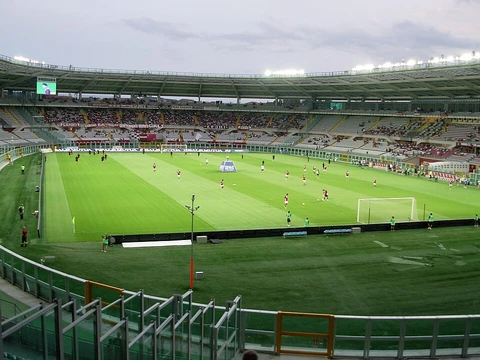
The Mole Antonelliana, rising above the city like a needle of iron and glass, has watched every one of these confrontations. It is the neutral ground, the shared sky. In the stands of the Stadio Olimpico Grande Torino, the bull's head is painted on the walls; in the Allianz Stadium, the old lady's crown gleams. But both look up at the same spire, and both know that when the whistle blows, there is only one city, and it belongs to whichever side is screaming louder that afternoon.
In Their Own Story
The fog rolls off the Po just before kickoff, threading through the stands of the Stadio Olimpico Grande Torino like a ghost that refuses to leave. A Torino fan in a faded granata scarf — the same one his grandfather wore in '49, the one that still smells faintly of tobacco and old wool — presses his forehead against the cold concrete of the upper tier. Below, the pitch is a rectangle of green so vivid it looks painted. Across the city, in the white-and-black cathedral of the Allianz, a Juventus supporter in a pristine kit checks his watch, sips an espresso from a paper cup, and murmurs, 'They'll park the bus. They always park the bus.'
The Mole glows amber in the distance, its spire a single bright thread against the pewter sky. A child in the Torino crowd, maybe eight years old, holds a plastic bull's head above her head and chants along with the drums. She doesn't know about Superga. She doesn't know about the 'Grande Torino.' She knows only that the other team is the one in the stripes, and that today, for ninety minutes, the whole city is hers.
The referee's whistle cuts through the fog. The drums answer. The Mole watches, indifferent and eternal, as the two halves of Turin remember, for one night, that they are the same city.
Reader's Guide
The Derby della Mole is unique in Italian football because it is the only true same-city rivalry where both clubs have been top-tier for over a century. Torino and Juventus share the same streets, the same dialect, the same fog rolling off the Po. Yet they occupy entirely different social worlds. Torino is the neighbourhood team, the bull that charges into the stands and bites back. Juventus is the institution — the 'Vecchia Signora' who arrived in a tailored suit and never left the boardroom. This 'same-city, different-world' tension has no direct parallel in other Italian derbies, where the rival usually represents a different city or a genuinely different social stratum.
The rivalry was forged in the 1940s, when Torino's 'Grande Torino' dominated Serie A and Juventus, despite their pedigree, were the second string in their own city. The Superga disaster of 1949 inverted that dynamic permanently: Torino's golden generation died on a hillside, and Juventus inherited the mantle of Turin's Scudetto-winning machine. Every derby since has carried that asymmetry — the grieving underdog against the comfortable champion.
Defining encounters include the 1975–76 season, when Torino, led by a young squad, won their second and most recent Scudetto, silencing a decade of Juventus dominance; the post-Superga derbies of the early 1950s, when Torino's rebuilt side met Juventus in matches charged with an almost unbearable emotional weight; and the countless derbies of the 2000s and 2010s, when Torino's long absence from Serie A turned every return into a redemption narrative, and every Juventus victory into a reminder of the gap. Transfer wars have added fuel: players who moved between the two clubs, sometimes in the same season, became lightning rods for a city that still cannot decide which team it truly loves.
Did You Know?
- The Mole Antonelliana, after which the derby is named, was originally designed as a synagogue in the 1860s before being repurposed as a national monument — a fitting metaphor for a rivalry that changed its meaning over t
- Torino's 'Grande Torino' of the 1940s was so dominant that the team was sometimes called 'the team that cannot lose,' a phrase that made the Superga crash of 1949 feel, to the city, like a sentence rather than an acciden
- Torino's granata (dark red) colour was chosen partly to distinguish the club from the white-and-black of Juventus and the other Turin sides of the era, making the derby visually as stark as it is emotionally.
- The rivalry predates the modern Serie A format; Torino and Juventus have been playing each other since the early 1900s, making the Derby della Mole one of the longest continuously contested club rivalries in European foo
More in Great Rivalries
Elsewhere in the Torino FC universe
Spotted an error? Know more?
This is a living reference — every entry is fact-audited, and reader corrections feed straight into our audit queue. Suggest an edit · See this site's audit record