Derby di Genova
One city, two crests, a century of pride that never quite fits in one stadium.

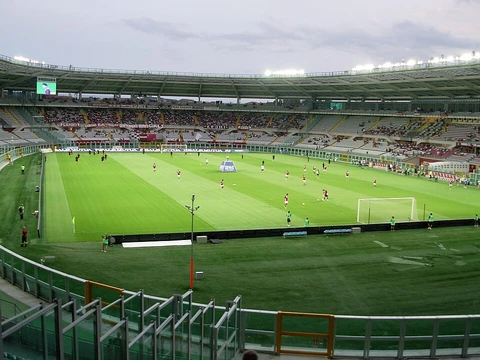
The Derby di Genova (also called the Derby ligure) is the intra-city rivalry between Genoa CFC and UC Sampdoria, the two professional football clubs of the Ligurian port city of Genoa. Born from a shared geography but divided by class, history, and identity, it is one of Italy's most emotionally charged fixtures. Genoa, founded in 1893, carries the weight of being among the oldest clubs in the world and a pillar of early Italian football. Sampdoria, forged in 1946 from the merger of Sampierdarenese and Andrea Doria, represents a younger, working-class identity that burst onto the national stage with a Serie A title in 1990–91. Both clubs call Stadio Luigi Ferraris (Marassi) home, meaning the derby is fought on the same turf, under the same sky, for the pride of the same city.
- Rivalry type
- Intra-city (both clubs from Genoa, Liguria)
- Genoa CFC founded
- 1893
- UC Sampdoria formed
- 1946 (merger of Sampierdarenese & Andrea Doria)
- Shared home ground
- Stadio Luigi Ferraris (Marassi)
- Sampdoria Serie A title
- 1990–91
- Genoa early national titles
- Multiple (1898, 1900, 1914–15, 1925–26, 1942–43)
- Genoa colours
- Rossoblù (red and blue)
- Sampdoria colours
- Blucerchiati (navy blue and white)
Lore & Background
Genoa's football story begins in the 1890s, when the city's merchant and industrial elite founded a club that would go on to claim multiple early Italian championships. For decades, Genoa CFC was the sole professional voice of the city, and the Marassi ground—originally Stadio di Marassi, later renamed Stadio Luigi Ferraris—became the spiritual home of Ligurian football. The club's identity is stitched into the working docks, the hillside lanes, and the old aristocratic quarters of the city. To be a Genoa supporter is to claim a lineage that stretches back to the very first organised football matches played on Italian soil.
Sampdoria arrived later, born in 1946 from the union of two smaller clubs rooted in the Sampierdarenese industrial district south of the city centre. The 'blucerchiati' identity was always more proletarian, more defiant, more tied to the shipyards and the factory floors. For years Sampdoria existed in Genoa's shadow, but the late 1980s and the 1990–91 Scudetto under Vujadin Boškov changed the psychological balance irrevocably. Suddenly the 'younger' club could look the historic one in the eye and win. The derby became a referendum on who truly owned the city's football soul.
The shared stadium is both a blessing and a wound. On derby days, Marassi is split down the middle—rossoblù on one side, blucerchiati on the other—creating a visual and acoustic duelling that no other Italian fixture replicates quite the same way. There is no travelling to a neutral ground; the two communities literally share the same concourse, the same turnstiles, the same city. That proximity makes every goal, every foul, every trophy celebration feel like a personal provocation across the stands.
In Their Own Story
The November rain hits the Marassi roof in long silver sheets, and the floodlights buzz to life over a pitch that has seen a hundred seasons of this same argument. In the rossoblù end, a grandfather in a threadbare Genoa scarf presses his forehead against the glass barrier, watching the tunnel where the blucerchiati will emerge in their navy and white. Across the aisle, a young Sampdoria fan in a 1991 Scudetto jersey—bought at a market stall off Via XX Settembre—drums his fingers on the concrete seat, counting down the minutes. The city smells of wet wool and the salt air drifting in from the harbour. A steward calls for calm. Nobody listens. When the referee's whistle splits the damp air, two halves of Genoa exhale at once, and the derby begins its ancient, necessary violence.
Reader's Guide
Genoa CFC: The rivalry exists because Genoa is the elder, the aristocrat, the club that was there before the others. Founded in 1893, Genoa carried the banner of Italian football through the first decades of the 20th century, winning multiple early championships and building an identity tied to the city's mercantile and industrial heritage. To Genoa supporters, the derby is a defence of legacy: 'We were here first, we built this game in this city.' The emotional core is one of guarded pride and a fear of being surpassed by the upstart from the shipyard district. Defining encounters include the early-20th-century dominance when Genoa was the undisputed voice of Ligurian football, the 1990–91 season when Sampdoria's Scudetto shattered Genoa's psychological monopoly, and the recurring late-2000s/early-2010s derbies where both clubs were fighting relegation and the stakes felt existential for the city's football identity.
UC Sampdoria: For the blucerchiati, the rivalry is a story of proving worth. Formed in 1946 from the merger of Sampierdarenese and Andrea Doria, Sampdoria was always the 'other' club in Genoa—the one from the industrial south, the one with the working-class badge. The 1990–91 title under Boškov, with the famous 'Sampdoria 91' squad, was the moment the city had to reckon with the fact that its younger child could outperform the elder. The rivalry is also fuelled by the shared-stadium tension: both clubs enter through the same gates, share the same concourse, and the visual split of Marassi on derby day makes the division between the two communities impossible to ignore. The 'same-city, different-world' tension is acute here—two clubs, one city, one ground, and a century of arguments about who truly represents Genoa's football heart. Defining moments include the 1990–91 Scudetto run, the 1991–92 European Cup final (Sampdoria's high-water mark), and the repeated late-season derbies where a single result could decide which club survived in Serie A.
Did You Know?
- Genoa CFC, founded in 1893, is one of the oldest continuously operating professional football clubs in the world, predating many of Europe's current top-flight sides.
- Sampdoria's 1990–91 Serie A title was the first Scudetto won by a club from the city of Genoa in over 45 years, ending Genoa CFC's long psychological dominance of local football.
- Both clubs share Stadio Luigi Ferraris (Marassi), meaning on derby day the two fanbases occupy opposite ends of the same bowl with no travelling required—making the atmosphere uniquely compressed and intense.
- Sampdoria was created in 1946 as a merger of two pre-war clubs, Sampierdarenese and Andrea Doria, meaning the 'blucerchiati' identity is younger than most rivalries in Italy.
More in Great Rivalries
Elsewhere in the Torino FC universe
Spotted an error? Know more?
This is a living reference — every entry is fact-audited, and reader corrections feed straight into our audit queue. Suggest an edit · See this site's audit record