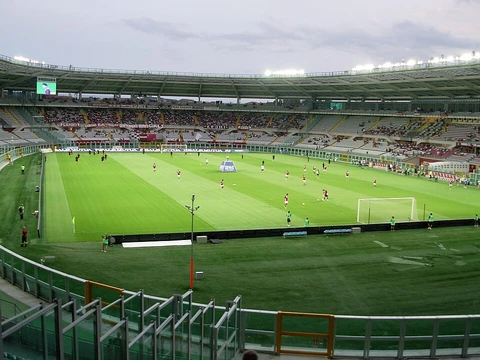
Fossa
One end, one roar, one bull — the Fossa is where Torino never sits down.

La Fossa — or more formally, Curva Fossa — is the ultras heart of Torino FC, the standing and chanting section where the most passionate granata gather to turn a matchday into a living, breathing ritual. Named for the old 'pit' or 'ditch' that traditionally marked the ultras end in Italian grounds, the Fossa is less a stand than a congregation: a wall of scarves, flags, and voices that has echoed through Torino's stadiums from the old Stadio Olimpico di Torino, through the Stadio delle Alpi, and into the current Stadio Olimpico Grande Torino.
It is the emotional engine of the club's identity. While the rest of the stadium watches football, the Fossa performs it — drumming, singing, and holding the line through every result, every transfer window, every off-field controversy. For the working-class districts of Turin that raised the granata faithful, the Fossa is where the bull roars back.
- Type
- Ultras section (Curva)
- Club
- Torino FC
- Stadium (current)
- Stadio Olimpico Grande Torino
- Stadium (previous)
- Stadio delle Alpi (1990–2014)
- Nickname
- La Fossa / Curva Fossa
- Club colours
- Granata (dark burgundy-red)
- City symbol
- The Toro (Bull)
Lore & Background
The name 'Fossa' is older than any single stadium. In Italian football culture, the curva — the ultras section — has long been called the fossa, the pit, the place where the crowd digs in and refuses to be moved. At Torino, that tradition crystallised into a named identity: Curva Fossa became the banner under which the most committed supporters organised, chanted, and bled granata through decades of ups and downs. It carried the weight of the 1949 Superga tragedy, the long lean years after the Grande Torino era, and the slow, stubborn rebuild that followed.
The Fossa is not a brand; it is a practice. It means arriving early, setting up the tifo, keeping the drumbeat unbroken for ninety minutes plus stoppage. It means singing through a 0-3 defeat as loudly as through a 3-0 victory. It means that when the bull flag drops from the upper tier, the whole end shakes. The section has weathered stadium relocations, police restrictions, and the quiet erosion of matchday culture across Italy, yet the core ritual — the collective roar, the scarves raised, the 'Toro' chant rolling like thunder off the concrete — has remained intact.
In the broader narrative of Torino FC, the Fossa is the living thread connecting the 1906 founding to the present. It is the section that remembers Valentino Mazzola's name as a prayer, that treats the granata shirt as a uniform rather than a product, and that insists the club belongs to the city's streets as much as to its boardroom.
In Their Own Story
The away bus has already left. The pitch lights hum to life over a wet October evening, and the Fossa is coming alive in that slow, tectonic way — first the drums, a low pulse like a second heartbeat, then the voices finding the key. A tifo unfurls behind the goal: a massive bull in granata and white, its horns sweeping the width of the stand. The air smells of cold rain and cheap coffee from the bar two streets over. A kid in a too-large jersey presses his face to the barrier, eyes wide, while his grandfather beside him chants the old words without looking up, as if the melody is wired into his bones. The home team blunders a pass. The Fossa doesn't boo. It sings louder. That is the covenant: you do not abandon the bull, not even when the bull stumbles.
Reader's Guide
Walk into the Stadio Olimpico Grande Torino on a Torino home matchday and the Fossa announces itself before you see it: a low, rolling drumbeat that you feel in your sternum, a wall of granata scarves swaying in unison, and a sound that is less 'cheering' than 'roaring' — a single, sustained exhalation from thousands of throats.
The section sits at one end of the stadium, behind the goal, stacked in tiers that rise steeply so every face is visible, every flag readable. The upper tier is where the tifo drops — the bull, the club crest, the words 'TORO' in block letters. The lower tier is where the drums live, where the beat is set, where the oldest ultras stand with their backs to the pitch and their faces to the crowd, conducting the show.
The symbols are non-negotiable. The bull — the Toro — is not a mascot; it is the city's ancient emblem, the Taurinum from which Torino takes its name. The granata shirt is a working-class uniform, not a fashion statement. And the chant, the long drawn-out 'To-ro-ro-ro' that builds and breaks like a wave, is the sound that defines a matchday more than any goal.
This is a section that carries grief (Superga, 1949) and stubbornness (decades without a Scudetto) in equal measure. It is warm, loud, and fiercely loyal — the soul of the club made audible.
Did You Know?
- The name 'Fossa' (pit/ditch) is a traditional Italian football term for the ultras curva, predating any single Torino stadium and reflecting a broader culture of the standing, chanting end.
- Torino's 7 Scudetti all came before or in the immediate aftermath of the 1949 Superga air disaster, which killed the entire 'Grande Torino' squad including star forward Valentino Mazzola — a loss the Fossa still marks wi
- The bull (Toro) is not merely a club nickname; it derives from 'Taurinum,' the ancient name for the city of Turin, making the symbol a direct link to the city's Roman-era identity.
- The local derby against Juventus is called the 'Derby della Mole,' named after the Mole Antonelliana, Turin's iconic landmark, and remains one of the most intense fixtures in Italian football.
More in Stadium & Culture
Elsewhere in the Torino FC universe
Spotted an error? Know more?
This is a living reference — every entry is fact-audited, and reader corrections feed straight into our audit queue. Suggest an edit · See this site's audit record