Granata identity
A bull that batters through the dark, a city that refuses to let go.

Granata identity is the living, breathing culture of Torino FC — the garnet-and-black shirt, the bull on the crest, the thunder of the Curva Sud, and the unbroken thread of working-class Turin that runs through every matchday. It is not merely a kit colour or a nickname; it is a declaration that this city built its wealth with its hands and its football with its heart.
Born in the industrial smoke of early-20th-century Turin, the Granata identity fuses the stubbornness of the local bull with the memory of the Grande Torino, the legendary squad whose near-total loss in the 1949 Superga air disaster turned a football team into a civic symbol of grief, resilience, and refusal to be erased. To wear granata is to carry that weight.
- Founded
- 1906
- Nickname
- Il Toro / I Granata
- Colours
- Granata (garnet) and black
- Stadium
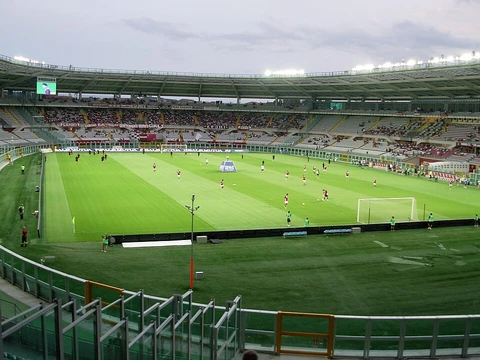
- Stadio Olimpico Grande Torino, Turin
- City
- Turin (Torino), Piedmont, Italy
- City Rivalry
- Derby della Mole (vs Juventus)
Lore & Background
The granata shirt was never a fashion choice. In the 1900s and 1910s, Turin was a city of foundries, textile mills, and the great Fiat works, and the workers who filled the early terraces wanted a colour that was neither the black-and-white of their neighbours across the Mole nor the easy red of the south. Granata — that deep, bruised garnet — was the colour of the evening over the Po, of iron filings in the light, of the skin after a day at the lathe. It stuck, and it has never left.
The bull, the Toro, is the city's oldest stubbornness made flesh. It does not charge gracefully; it lowers its head and pushes, and pushes, and will not be moved. That is the Torino way in football: not the most technically polished, not always the most glamorous, but the one that grinds, that suffers, that keeps its jaw set when the scoreline is against it. The Curva Sud has chanted the name for generations, and the sound is less a song than a demand — a reminder that the animal is still in the ring.
No part of this identity is complete without Superga. The Grande Torino of the late 1940s was a side of almost mythic cohesion, and the plane crash of 4 May 1949 that killed the squad and its entourage turned the club into something beyond sport. The grief was the city's grief. In the seasons that followed, the granata shirt was worn as a memorial as much as a uniform, and the bull on the crest became a promise: we will not let them take this from us. Every match since has been played in the shadow of that sky over the hill, and every fan who stands in the curve carries it a little.
In Their Own Story
The floodlights hum to life over the San Salvario end and the air goes cold, the way it does in Turin in November when the mist comes off the Po and settles in the hollow of your lungs. A kid in a size-too-large granata scarf — his father's, probably his grandfather's — presses his forehead against the concrete barrier and whispers the word. Toro. Just once, testing it. Then the Curva behind him catches it, and the single word becomes a wall of sound that shakes the turnstiles, and the kid stops whispering and opens his mouth and the bull roars out of him, and for ninety minutes the city is one animal, one breath, one stubborn, bruised, unkillable thing.
Reader's Guide
The Curva Sud is where the soul lives. You don't walk into the Olimpico Grande Torino the way you walk into a cathedral — you walk into it the way you walk into a factory floor after a twelve-hour shift, where the air still smells of iron and the noise is the noise of people who built this city with their hands. The end is a concrete throat, and when ten thousand voices push 'Toro, Toro, Toro' against the stands, the vibration travels through the soles of your feet before it reaches your ears.
The bull on the crest isn't decorative. It's the stubbornness of the San Salvario neighbourhood, the Fiat workers who came off the line and needed something that wasn't the black-and-white of the other side of the Mole. Granata is not red. It is not purple. It is the colour of a bruise that won't fade, the colour of the evening sky over the Po when the factories are still running.
And the chant — you don't learn it, you inherit it. Your grandfather stood in that curve in '49, before the plane went down, and he stood there after, because the team was the city and the city was the team. You press your chest against the concrete, you open your mouth, and the bull roars out of you whether you want it to or not. That's the identity. Not a brand. A scar that refuses to close.
Did You Know?
- The Superga air disaster of 4 May 1949 killed the entire 'Grande Torino' squad and staff, turning the club into a permanent civic memorial in Turin.
- The granata (garnet) shade is unique to Torino among major Italian clubs, deliberately chosen to distinguish the team from both Juventus's black-and-white and the reds of southern Italian sides.
- The Derby della Mole is one of the few city derbies in world football where both clubs share the same metropolitan area and, for decades, the same stadium ground.
- The bull (Toro) has been the club's emblem and nickname since its earliest decades, chosen to embody the stubborn, head-down strength of Turin's industrial working class.
More in Stadium & Culture
Elsewhere in the Torino FC universe
Spotted an error? Know more?
This is a living reference — every entry is fact-audited, and reader corrections feed straight into our audit queue. Suggest an edit · See this site's audit record