Ultras Torino
Granata blood, bull's horns, and a Curva that never lets the silence win.

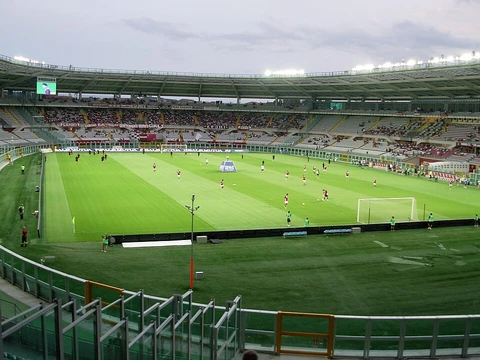
Ultras Torino are the organised, fan-driven core of support for Torino FC, gathering in the Curva Sud of the Stadio Olimpico Grande Torino to provide the raw, unbroken wall of noise that defines a matchday in the capital of Piedmont. They are not a single registered entity but a constellation of tifosi groups, drum sections, and banner crews who share a common identity: the granata shirt, the bull, and the working-class soul of the city of Turin.
Their role extends far beyond a 90-minute performance. Ultras Torino carry the club's memory — the five consecutive Scudetti of the 1940s, the grief of Superga, the long lean years — into every away end and every derby. They are the living archive, the ones who ensure that a Torino match is never quiet, never polite, never merely a game.
- Club
- Torino FC
- Founded
- 1906
- Colours
- Granata (dark red / burgundy)
- Stadium
- Stadio Olimpico Grande Torino
- Ultras Section
- Curva Sud (South Stand)
- City Nickname
- Il Toro (The Bull)
- Rivalry
- Derby della Mole (vs Juventus)
Lore & Background
The ultras tradition at Torino grew out of the same soil that grew the club itself: the workshops, the canals, the narrow streets of the city's southern and western quarters where factory workers and their families have worn the granata shirt as a badge of identity since the 1920s. Unlike the more commercial, ticketed support of many modern clubs, the Curva Sud has always been a standing, singing, drumming community where a season ticket is a family heirloom and a child's first match is a rite of passage.
The identity is inseparable from the city's symbol, the bull. Turin's coat of arms bears the bull, and the club inherited that emblem as its own. In the Curva Sud, the bull is not a logo on a shirt; it is a totem. Banners depicting the bull with lowered horns, the granata scarf wrapped around its neck, appear match after match, season after season, a visual declaration that this is the city's team, the people's team, the one that bled for them through the leanest decades of the 1960s and 1970s.
The Superga disaster of 4 May 1949, in which the entire first team perished in a plane crash on the hill above the city, remains the emotional bedrock of Torino's ultras culture. The grief was not merely a sporting loss; it was a communal mourning that bound the club to the city in a way no trophy could. Ultras Torino carry that weight. Their songs, their silence at the 11th minute of certain fixtures, their refusal to let the club be reduced to a brand — all of it flows from that single, terrible afternoon on Superga hill.
In Their Own Story
It is a Tuesday in November, and the rain has been falling on Turin since morning, turning the cobbles of the Borgo into a dark mirror. In the Curva Sud, the drums have been talking since the first light. A young boy, no older than seven, presses his face to the barrier, his small hands gripping the cold metal, watching the flares bloom orange above the stands. His grandfather stands three rows back, a faded granata scarf knotted around his neck, his eyes closed as the bass thump of the tambores rolls through his chest. The away end is a thin, blue-grey smear of noise. Here, in the Sud, the air is thick with smoke and the sound of two thousand voices pushing a single note upward, a low, guttural chant that sounds less like a song and more like the city clearing its throat. The bull banner drops from the upper tier, unfurling in the wet wind, and for a moment the whole stand goes still — just the rain, the drums, and the boy's wide eyes reflecting the orange glow.
Reader's Guide
Walk into the Stadio Olimpico Grande Torino on a Torino home matchday and the first thing you feel is the bass. The Curva Sud sits at the south end of the pitch, a steep, concrete bowl where the seats are closer together than in the other stands, where the air is always a little warmer, a little thicker with the smell of wet wool and flare smoke. The drums — a dozen or more tambores — set the pulse, a steady, rolling thump that you feel in your sternum before you hear it with your ears.
The symbols are everywhere and nowhere. The bull is not printed on a programme; it is painted on a hand-stitched banner, held aloft by a kid in a hooded granata jacket. The scarf is not a product; it is a second skin, passed down, patched, worn until the granata fades to a dusty maroon. The 'Toro' chant is not a lyric sheet; it is a call-and-response that has been passed from father to son so many times that the words feel less like language and more like a heartbeat.
This is a working-class identity. Turin built its wealth in factories, in the Fiat plants, in the canals and the workshops, and the granata shirt was the uniform of the people who built the city, not the people who owned it. The Curva Sud is where that memory lives. It is loud, it is proud, it is a little bit rough, and it will not, under any circumstances, go quiet for ninety minutes. That is the deal. That has always been the deal.
Did You Know?
- Torino FC won five consecutive Serie A titles from 1943-44 through 1948-49, a run that remains one of the most dominant in Italian league history.
- The Superga air disaster of 4 May 1949 killed the entire Torino first team, and the club's identity has carried that collective grief ever since.
- Torino was founded in 1906, making it one of the oldest professional football clubs in Italy.
- The rivalry with Juventus, known as the Derby della Mole, is played in the same city and has been a fixture of Italian football since the early 1900s.
More in Stadium & Culture
Elsewhere in the Torino FC universe
Spotted an error? Know more?
This is a living reference — every entry is fact-audited, and reader corrections feed straight into our audit queue. Suggest an edit · See this site's audit record